
 Guitarra e Baixo
 Bateria e Percussão
 Percussão de Orquestra
 Piano e Teclados
 Sopros de Metal
 Sopros de Madeira
 Instrumentos de Corda
 Coro e Voz Solista
 Instrumentos Tradicionais
 Música para Escolas
 Livros sobre Música
 Ensemble, Orquestra e Banda
 Todos os instrumentos
 Música Sacra
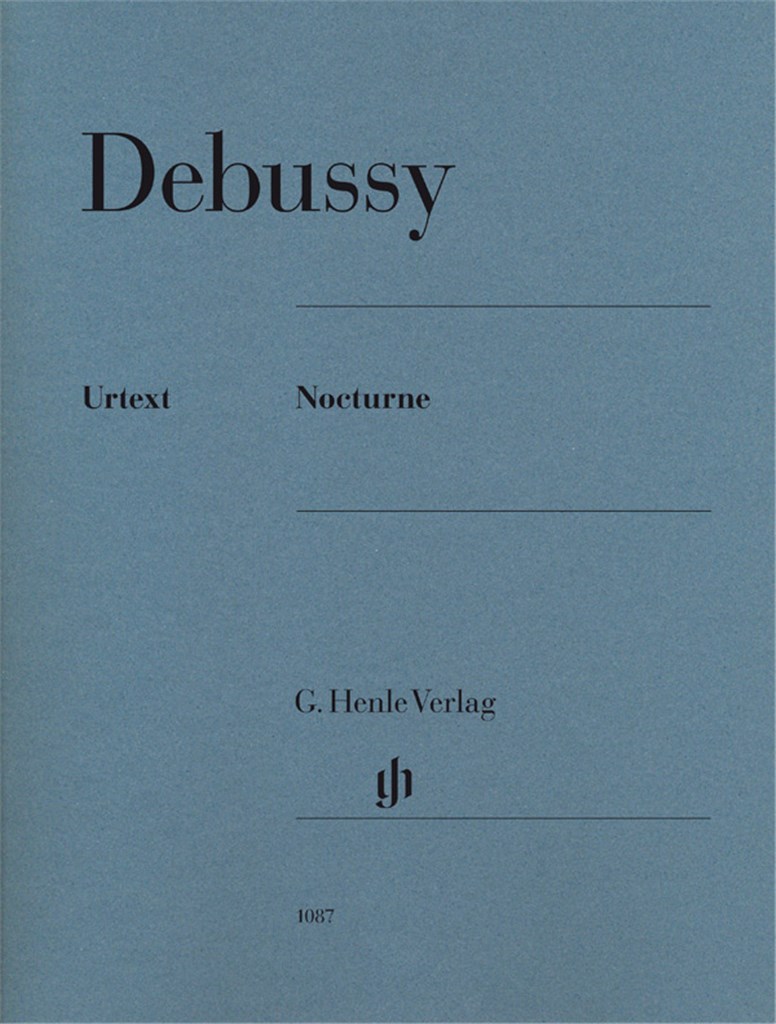
Nocturne
Single Edition From Hn 404
8,50 €
Descrição
This piece is straightforward in its construction but highly advanced in its harmonies, and links up with the widely popular, 19th-century tradition of the “night piece” or “nocturne” forpiano.
Its themes and modulations are highly reminiscent of Gabriel Fauré, but in its chromatic voice-leading and unusual treatment of metre – such as in the 7/4 central section – Debussy makes a statementall of his own. Nothing is known about the history of its composition.
Debussy’s 1892 contract with his publisher states merely that the composer had originally called it “Interlude”, but then decided uponthe far more suitable title of “Nocturne”. One of Debussy’s most popular early piano works, it is now available in a Henle Urtext edition.
Detalhes
Referência:HN1087
Editora:G. Henle Verlag
Compositor:Claude Debussy
Categoria:Piano
Instrumentação:Piano
Media:Livro
Ano Publicação:2018
ISMN:9790201810874
Semelhantes
Mais de Piano
Mais de G. Henle Verlag
Navegador Inteligente
Compositor: Claude Debussy
Marca: G. Henle Verlag
Categoria: Piano